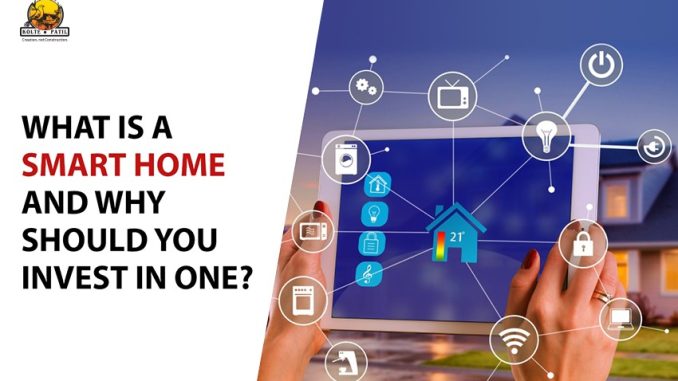
Smart homes are no longer futuristic concepts confined to science fiction. They have become a reality for millions of households, integrating connected devices, sensors, and automation systems into everyday living. From smart thermostats and lighting to advanced security cameras and leak detection systems, these technologies are transforming how people interact with their homes. As this transformation unfolds, the insurance industry is being forced to rethink its role, adapting to a world where risk is monitored, managed, and even prevented in real time.
Traditionally, home insurance has been reactive. Policies were designed to cover losses after an event occurred, whether it was a fire, burglary, or flood. Smart home technology changes that equation by enabling proactive risk management. Devices that detect smoke earlier, alert homeowners to water leaks, or automatically lock doors reduce the likelihood of costly claims. For insurers, this shift presents both opportunities and challenges. On one hand, fewer claims mean lower payouts. On the other, insurers must recalibrate their models to account for the new dynamics of risk prevention.
The data generated by smart homes is central to this evolution. Sensors and connected devices produce streams of information about how homes are used, maintained, and secured. Insurers can leverage this data to create more personalized policies, offering discounts to homeowners who adopt risk-reducing technologies. A household with a smart water shutoff system, for instance, may be less likely to suffer extensive damage from a burst pipe, justifying lower premiums. This level of personalization aligns with broader trends in insurance, where coverage is increasingly tailored to individual behavior and circumstances.
Smart security systems are particularly influential in shaping insurance. Traditional burglary coverage was based largely on neighborhood crime statistics and general assumptions about vulnerability. With smart cameras, motion sensors, and connected alarms, insurers can assess risk more precisely. Homes equipped with these technologies are demonstrably harder to target, and insurers are beginning to reward homeowners with reduced rates. At the same time, insurers must consider the reliability of these systems and the potential for technical failures, ensuring that coverage remains robust even in the face of digital vulnerabilities.
The integration of smart home technology also raises questions about liability. If a connected device fails to operate correctly—say, a smoke detector that does not trigger during a fire—who is responsible? Is it the homeowner, the device manufacturer, or the software provider? These questions complicate the insurance landscape, requiring new frameworks to determine accountability. Insurers must navigate these complexities carefully, balancing the benefits of smart technology with the risks of dependency on systems that are not infallible.
Another dimension of smart homes is their impact on claims processing. In the past, disputes often arose over the cause or extent of damage. With connected devices, insurers can access detailed data that clarifies events. A smart sensor can confirm when a leak began, or a security camera can provide evidence of a break-in. This transparency accelerates claims resolution, reducing friction between insurers and policyholders. It also enhances trust, as customers feel reassured that their claims are supported by objective data rather than subjective assessments.
The rise of smart homes is also influencing how insurers engage with customers. Instead of being seen solely as providers of financial protection, insurers are positioning themselves as partners in risk management. Many now encourage homeowners to adopt smart devices, sometimes even subsidizing their installation. This proactive approach strengthens customer relationships, as insurers are perceived not just as reactive entities but as contributors to safety and peace of mind. It represents a cultural shift in the industry, aligning insurance more closely with prevention than compensation.
Of course, the reliance on smart home data introduces privacy concerns. Homeowners may be wary of sharing detailed information about their daily routines, energy usage, or security practices. Insurers must address these concerns by ensuring transparency in how data is collected, stored, and used. Building trust around privacy is essential, as the success of smart home insurance depends on customers feeling comfortable with the exchange of information. Striking the right balance between personalization and confidentiality will be a defining challenge for the industry.
Smart homes also highlight the growing intersection between insurance and technology companies. Partnerships between insurers and device manufacturers are becoming more common, with insurers offering discounts for specific products or integrating their services with smart platforms. These collaborations create new ecosystems of risk management, but they also raise questions about competition and dependency. Insurers must ensure that such partnerships enhance customer value without limiting choice or creating monopolistic dynamics.
The broader societal implications of smart homes and insurance are significant. As adoption grows, the collective risk profile of communities may change. Neighborhoods with widespread use of smart security systems may experience lower crime rates, while areas with advanced fire detection may see fewer catastrophic losses. Insurers will need to account for these macro-level shifts, adjusting their models to reflect not just individual households but broader patterns of risk reduction across entire regions.
Looking ahead, the relationship between smart homes and insurance is likely to deepen. As technology becomes more sophisticated, insurers will have access to even richer data, enabling more precise risk assessments and innovative product designs. Coverage may evolve to include guarantees tied directly to device performance, or dynamic pricing that adjusts in real time based on household behavior. The possibilities are vast, but they require insurers to remain agile, embracing innovation while safeguarding the principles of fairness and trust that underpin the industry.
Ultimately, the rise of smart homes is reshaping insurance into something more interactive, personalized, and preventive. It challenges insurers to move beyond traditional models and embrace a future where technology plays a central role in managing risk. For homeowners, it offers the promise of greater security, lower costs, and faster claims resolution. For insurers, it presents both opportunities and responsibilities, demanding creativity, transparency, and adaptability. As smart homes continue to proliferate, insurance will not just protect against loss—it will become an integral part of building safer, smarter, and more resilient communities.